
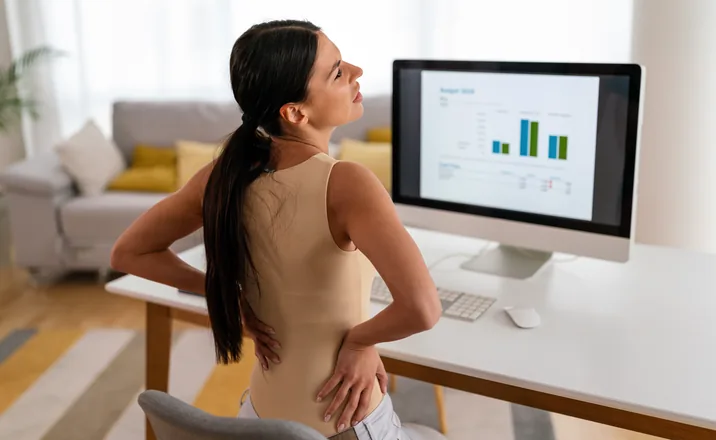
If your low back and buttock hurt most when you get up from a chair, climb the stairs, or roll over in bed, the source may not be a disc or the sciatic nerve. It may be the sacroiliac joint, usually called the SI joint. SI joint pain is easy to mistake for sciatica, and the two are treated differently, which is why the exam comes first.
What the SI Joint Is
The SI joints sit where the spine meets the pelvis. When one becomes inflamed, or moves too much or too little, it causes pain in the low back, buttock, and upper thigh. A car accident can also jam or sprain it.
The Signs
- Pain low and to one side, in the low back, buttock, and upper thigh
- Pain that flares when you stand up from a chair, climb stairs, or roll over in bed
- Stiffness, or a feeling that the joint is unstable
- Pain when sitting, standing, or walking
Back pain with loss of bladder or bowel control, numbness in the groin or inner thighs, or rapidly worsening leg weakness is a different situation and needs emergency care right away.
SI Joint Pain or Sciatica?
The two are close cousins and often get mixed up. Sciatica usually runs below the knee and follows the nerve down the back of the leg, often with numbness or tingling in the calf or foot. SI joint pain tends to stay in the low back, buttock, and upper thigh. A disc, a tight piriformis muscle, and the SI joint can all cause pain that feels similar, and sometimes two things are happening at once.
That is why the exam matters more than the label. A physical exam with specific movement tests tells them apart, with imaging when it is needed. Our guide to sciatica or back pain walks through the patterns in more detail.
Why the Right Answer Changes the Plan
An SI joint that is stuck or unstable calls for a different plan than a disc pressing on a nerve. Spinal decompression takes pressure off a disc, which makes it a strong tool for disc and nerve pain, while the SI joint calls for chiropractic care to restore motion and physical therapy to build stability. Finding the real source first means your plan fits the problem from day one.
How SI Joint Pain Is Treated
Every plan starts with a thorough exam of the spine, hips, and SI joints, and imaging when it is needed. From there, your plan draws on the team:
Restore motion. Chiropractic care restores motion to restricted spinal and SI joints, and massage therapy eases muscle spasm.
Build stability. Physical therapy strengthens the core and hip muscles that support the low back and pelvis, so the SI joint stays stable once the pain settles.
Calm a severe flare. When pain is severe, targeted injections from our medical providers calm inflammation around a nerve or joint so you can move and progress.
Progress is measured along the way, including range of motion, pain levels, and what you can do day to day, so the plan changes as you do.
For Pain That Has Lasted
For long-standing pain in the low back, hip, or groin that has not improved with physical therapy or other non-surgical options, our Interventional Surgical Center in West Jordan offers SI joint fusion. It is a minimally invasive outpatient procedure that uses titanium implants, placed with real-time imaging, to stabilize the joint. It is elective, and your doctor helps you weigh the benefits based on your condition and goals.
Find the Source First
At Integrated Pain Specialists, medical providers, chiropractors, and physical therapists work under one roof, so your back, hips, and SI joints are evaluated together. Your first consultation is free at our Bountiful or South Jordan clinic. Read what to expect at your first visit, or learn more about how we treat sciatica and SI joint pain and back pain. If your pain started after a crash, see back pain after a car accident.
Frequently Asked Questions
What does SI joint pain feel like?
It usually sits low and to one side, in the low back, buttock, and upper thigh. It tends to flare when you stand up from a chair, climb stairs, or roll over in bed, and it can come with stiffness or a feeling that the joint is unstable.
How do I know if it is SI joint pain or sciatica?
Sciatica usually runs below the knee and follows the nerve down the back of the leg, often with numbness or tingling. SI joint pain tends to stay in the low back, buttock, and upper thigh and flares when you stand up, climb stairs, or roll over in bed. A physical exam with specific movement tests tells them apart.
Can SI joint pain be treated without surgery?
Yes. Care starts without surgery. Chiropractic care restores motion to the joint, physical therapy strengthens the core and hip muscles that keep the pelvis stable, and targeted injections can calm a severe flare. SI joint fusion is an option for long-standing pain that has not improved with non-surgical care.
Can a car accident cause SI joint pain?
Yes. A crash can jam or sprain the SI joints, and the pain tends to sit low and to one side. You do not need a referral or an attorney to be seen after an accident.
Do you take insurance?
Most of our care is covered by many insurance plans, including Medicare. Coverage varies by insurer and individual policy, and our team verifies your benefits before any care begins.