
An Option When Other Treatments Fall Short
Spinal Cord Stimulation in Utah
A small implanted device that can calm chronic nerve pain with mild electrical pulses, tried first for several days so you can see whether it helps. Consultations at our Bountiful and South Jordan clinics.
What Is Spinal Cord Stimulation?
Interrupting Pain Signals Before They Reach the Brain
Spinal cord stimulation (SCS) uses thin wires, called leads, placed in the space just outside the spinal cord, and a small generator under the skin. The device sends mild electrical pulses that change how pain signals travel to the brain. Depending on the device, you may feel a light tingling or nothing at all.
SCS changes how pain is felt, and you control it with a handheld remote. It is an option for chronic nerve pain that has not improved enough with medication, injections, therapy or surgery.
Before a permanent device is implanted, you try it. A short trial with temporary leads shows whether SCS helps your pain.
Is Spinal Cord Stimulation Right for You?
Who May Benefit From Spinal Cord Stimulation
Spinal cord stimulation may be an option if you have long-lasting pain such as:
- Back or leg pain that continued after spine surgery
- Nerve pain from diabetes (diabetic neuropathy)
- Sciatica or other nerve pain down an arm or leg that has not responded to other care
- Complex regional pain syndrome (CRPS)
It is usually considered after more conservative treatments have been tried without enough relief. Many insurance plans, including Medicare, also ask for a psychological evaluation before a trial. It is a routine screening step, not a judgment about your pain. See how SCS fits care for recovery after surgery, sciatica and back pain.
Before You Decide
Is Spinal Cord Stimulation Right for You?
Your provider reviews your health and past treatments first, including any infection, bleeding problems, blood thinners, pregnancy, and any pacemaker or defibrillator, so the plan fits you. Let your provider know about any MRIs you expect to need, since that can affect which device is right for you.
SCS is usually done as an outpatient procedure, and the trial lets you decide with confidence: you try it at home for several days before choosing a permanent device. Your care team follows you closely through the trial, the implant and your recovery.
What to Expect
Spinal Cord Stimulation, Step by Step
- Evaluation. Your provider reviews your history, imaging and past treatments to see whether SCS fits your kind of pain, and arranges any screening your plan requires.
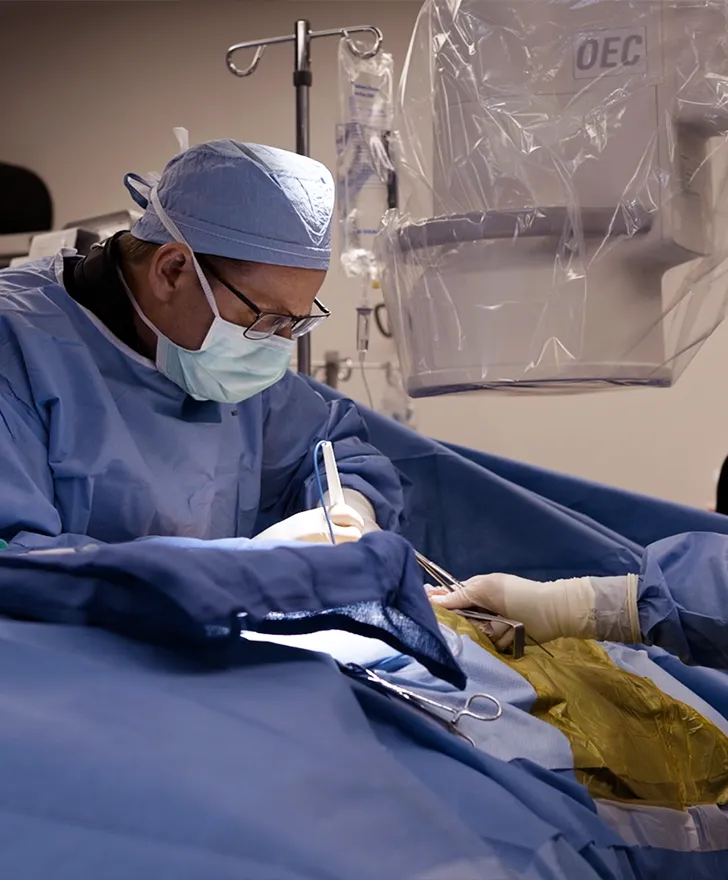
- The trial. Temporary leads are placed through a needle with X-ray guidance, as an outpatient procedure. They connect to a small device you wear outside the body, and you go home the same day and use it during your usual activities for several days, keeping the leads and device dry, so no showers, baths or swimming.
- Judging the trial. A trial usually counts as a success if your pain drops by at least half and you can do more. If it does not help enough, the temporary leads are removed and nothing is implanted.
- The implant. If the trial works, permanent leads are placed along the spine and a small generator is placed under the skin, usually near the upper buttock or the abdomen. It is an outpatient procedure, usually done at our Interventional Surgical Center in West Jordan and scheduled by your care team.
- Recovery. For about four to six weeks, avoid bending, twisting, lifting heavy things and reaching overhead so the leads can settle in place. Call your care team right away if you notice a fever, redness, swelling or drainage at an incision, a headache that won’t go away and is worse when you sit or stand, or new numbness or weakness. Your care team will tell you when you can drive and go back to work, and with many devices you turn stimulation off before driving or using machinery or power tools.
- Adjusting and follow-up. Settings are tuned to your pain, you learn to use the remote, and we check in over time. Many generators last ten years or more, and some are rechargeable.
Part of a Bigger Plan
Spinal Cord Stimulation as Part of Your Wider Plan
With nerve pain turned down, many people can move more, sleep better and get more out of physical therapy.
Some people are able to use less pain medication after SCS, a decision you make with your provider. Your provider can also talk with you about other options, such as targeted injections and, for joint pain, radiofrequency ablation.
Your care starts with a consultation at our Bountiful or South Jordan clinic, where your provider will recommend the treatment, or combination of treatments, that fits your situation best.
Insurance Coverage
Is Spinal Cord Stimulation Covered by Insurance?
Most of our care is covered by many insurance plans, including Medicare. Coverage varies by insurer and individual policy, and many plans ask for a psychological evaluation and a successful trial before they approve an implant. Our team verifies your benefits before any care begins.
See How It Works
Watch: Spinal Cord Stimulation
A short video on spinal cord stimulators from Integrated Pain Specialists.
COMMON QUESTIONS
Spinal Cord Stimulation FAQs
Does getting a spinal cord stimulator hurt?
The leads and generator are placed with numbing medicine and, depending on the procedure, sedation or anesthesia. Soreness around the incisions for a few weeks is common. Once it is on, stimulation feels like a light tingling with some devices, and with others you feel nothing.
How does the trial work?
Temporary leads are placed through a needle and connected to a small device you wear outside the body. For several days you go about your usual activities, keep the leads and device dry, and track your pain. If your pain drops by at least half and you can do more, you and your provider can talk about a permanent implant. If not, the temporary leads are simply removed.
How much pain relief should I expect?
The goal is to cut your pain by at least half, and the trial lets you feel the difference before you decide. Many people who go on to a permanent device get at least that much relief.
Can I have an MRI with a spinal cord stimulator?
It depends on the device. Some allow MRI scans under specific conditions and others do not. Tell your provider about any MRIs you expect to need before a device is chosen, and always tell imaging staff you have a stimulator.
How long is recovery after the implant?
Many people go home the same day. For about four to six weeks, avoid bending, twisting, heavy lifting and reaching overhead while the leads settle. Your care team will tell you when you can drive and go back to work, and with many devices you turn stimulation off before driving or using machinery or power tools.
Do you take insurance for spinal cord stimulation?
Most of our care is covered by many insurance plans, including Medicare. Coverage varies by insurer and individual policy, and many plans ask for a psychological evaluation and a successful trial before they approve an implant. Our team verifies your benefits before any care begins.