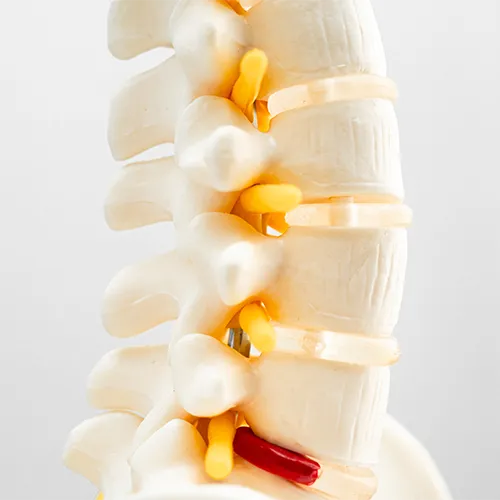

If you have a herniated disc, sciatica, or a back that has been told “you may need surgery,” you have probably come across spinal decompression. It is one of the most common things people ask about at our Bountiful and South Jordan clinics, and one of the most misunderstood. This guide covers who it is for, who it is not for, and what actually happens over a course of treatment.
The Short Answer
You may be a good candidate for spinal decompression if several of the following apply:
- You have a herniated, bulging, or degenerative disc confirmed on exam or imaging
- You have sciatica, or pain, numbness, or tingling that travels into an arm or leg
- Your back or neck pain has not responded to rest, medication, or basic care
- You have been told you may need surgery and want to try a non-surgical option first
- You still have pain after a previous back surgery
If that is you, keep reading. If most of those do not fit, keep reading anyway, because the section on who it is not for matters just as much.
What Decompression Actually Does
A spinal disc is a cushion between two vertebrae. When it bulges, herniates, or wears thin, it can press on the nerves that run beside it. That pressure is what produces the back or neck pain, the sciatica, or the numbness and tingling that travels down a limb.
Spinal decompression slowly and gently stretches the spine on a computer-controlled table. The stretch creates negative pressure inside the disc, which encourages bulging material to draw back in, restores space between the vertebrae, and improves the flow of fluid and nutrients the disc needs to heal.
That is the whole mechanism, and it explains both the strengths and the limits. Decompression treats pressure. If your pain comes from something other than a disc or a pinched nerve, it is not the right tool.
Is It the Same as Traction or an Inversion Table?
Not quite, and the difference matters. Traditional traction and inversion tables apply a steady pull that the body tends to resist by tightening the muscles around the spine. A decompression table cycles between stretch and rest under computer control, which lets those muscles relax so the pressure change reaches the disc itself rather than being absorbed by muscle guarding.
Who Decompression Is Not Right For
We would rather tell you this now than after a consultation. Decompression is typically not used when the pain is coming from somewhere the table cannot reach, or when stretching the spine is unsafe:
- Pregnancy
- A spinal fracture, tumor, or infection
- Severe osteoporosis
- Surgical hardware, such as a spinal fusion, in the area being treated
- Pain that the exam traces to a muscle or joint problem rather than a disc
None of these mean you are out of options. They mean decompression is not the option, and the evaluation points you toward what is: chiropractic care, physical therapy, targeted injections, or medical pain management, all available in the same clinic.
What a Treatment Series Looks Like
This is the part people are surprised by. Decompression is a series, not a single visit, because it works gradually.
Evaluation. We review your history, examine your spine, and look at any imaging to confirm that a disc or pinched nerve is the source and that decompression is appropriate for you.
Setup. You lie on the table fully clothed and are fitted with a comfortable harness that lets the system focus on the exact level of your spine that needs relief.
The session. The table applies gentle, computer-controlled traction that cycles between stretch and rest. Most people find it relaxing; some fall asleep. A typical session runs about 20 to 30 minutes, and you go back to your day afterward. There is no recovery time.
The course. Your provider recommends a series of sessions over several weeks based on your condition and how you respond, then reassesses along the way and adjusts the plan.
Why It Works Better as Part of a Plan
Relieving pressure on a disc is the first step. Keeping it relieved is the second. In both of our clinics, decompression is delivered as part of an integrated plan rather than on its own: physical therapy rebuilds the core strength and flexibility that protect the disc once the pressure is off, chiropractic care restores motion to the joints around it, and laser therapy can help calm inflammation in the surrounding tissue. Your providers work under one roof, so the plan is coordinated instead of pieced together across offices.
Find Out Where You Stand
The checklist above gets you a good guess. The consultation gets you an answer. If you have a disc or nerve problem that rest and medication have not fixed, book a free consultation at our Bountiful or South Jordan clinic and we will tell you honestly whether decompression is right for your spine. You can read more on our spinal decompression therapy page, or see how it fits into care for back pain and sciatica.
Frequently Asked Questions
Does spinal decompression hurt?
No. Most patients find it comfortable and relaxing. The table alternates between gentle traction and rest, and the force is adjusted to you. If anything is uncomfortable, the session can be adjusted right away.
How many sessions will I need?
It varies with your condition and how you respond. Decompression is delivered as a series over several weeks rather than a single visit, and your provider will recommend a plan after your evaluation.
Can decompression help a herniated disc in the neck?
Yes. It is commonly used for herniated and bulging discs in both the low back and the neck, as well as degenerative discs, sciatica, and pinched nerves. An evaluation with imaging confirms whether your disc is one it can help.
Can I have decompression after back surgery?
Pain that continues after a previous back surgery is one of the situations decompression is used for. The exception is surgical hardware, such as a fusion, in the area being treated. Your evaluation sorts out which applies to you.
Is spinal decompression covered by insurance?
Most of our care is covered by many insurance plans, including Medicare. Coverage varies by insurer and individual policy, and our team verifies your benefits before any care begins.